Retalia Public API 1.1: connect your commerce estate on your own terms

Your commerce data belongs to you. The Retalia Public API is how you use it — in your own systems, your own reporting, your own customer experiences, and in the products our partners build alongside us. Version 1.1 is a deliberate step up in how that connection feels to work with: a professional, predictable, well-documented surface for the parts of your business that matter most.
"Our platform governs how a commerce business actually runs. The Public API is how that control extends to everything else our customers and partners rely on so V1.1 was about making it something a developer can pick up, trust, and build on without a support call." - Andrew Payne, Commercial Director
Here's what changes for the teams building on it.
One contract, clearly stated
Every resource in version 1.1 follows the same shape, so the second integration you write is faster than the first. Routes are explicit about what they do, HTTP methods carry their proper meaning — read, create, replace, patch, delete — and every parameter arrives documented, with its type and whether it's required stated up front. Strict type checking is enforced across the surface, so mistakes surface at the boundary while you're building, not three weeks later in someone's month-end report.
Responses you can act on
When something goes wrong, you get a straight answer. Version 1.1 returns standards-based problem detail responses with consistent status codes, so your error handling can be written once and relied on everywhere. Every call can carry a request ID — send your own or let the platform generate it — which means when you do need us, the conversation starts with the exact call rather than a description of it.
Built for real trading volume
Reading data at scale is a first-class concern, not an afterthought. Paged endpoints share the same pagination controls throughout, with sensible defaults and a firm ceiling on page size, so large datasets come back in predictable, performant slices instead of one request that times out under load. Bulk work is handled as bulk work: customer records can be upserted individually or as a set, and file-based imports can be handed to the platform to process in the background, notifying you by email when they complete — no long-held connections, no guessing whether the job survived.
Reaching into how your business actually runs
Version 1.1 spans the operational core, not just the shop window. Items, price lists, baskets and promotional pricing through the pricing engine. Customer records, loyalty balances and customer orders. Purchase orders, goods receipt notes and the link between them. Shops, addresses, custom attributes, cash position and financial reporting. It's the same governing model the platform runs on, exposed so your other systems can work from the same truth rather than a copy of it.
Access that stays under your control
Integrations are explicit by design. Each one pairs a named integrator with a specific tenant, scoped to read-only or read-write, authenticated with a bearer token — so you always know precisely who can reach what. And because Retalia runs separate development, release-candidate and production environments, your partners can build and prove an integration against isolated data long before it touches a live trading day.
Start building
Full reference documentation is at publicapi-docs.retalia.cloud, with the complete version 1.1 endpoint specification available in our interactive API explorer.
To set up an integration, email support@retalia.com with your integrator username, the tenant you want to connect to, and the environments you need.
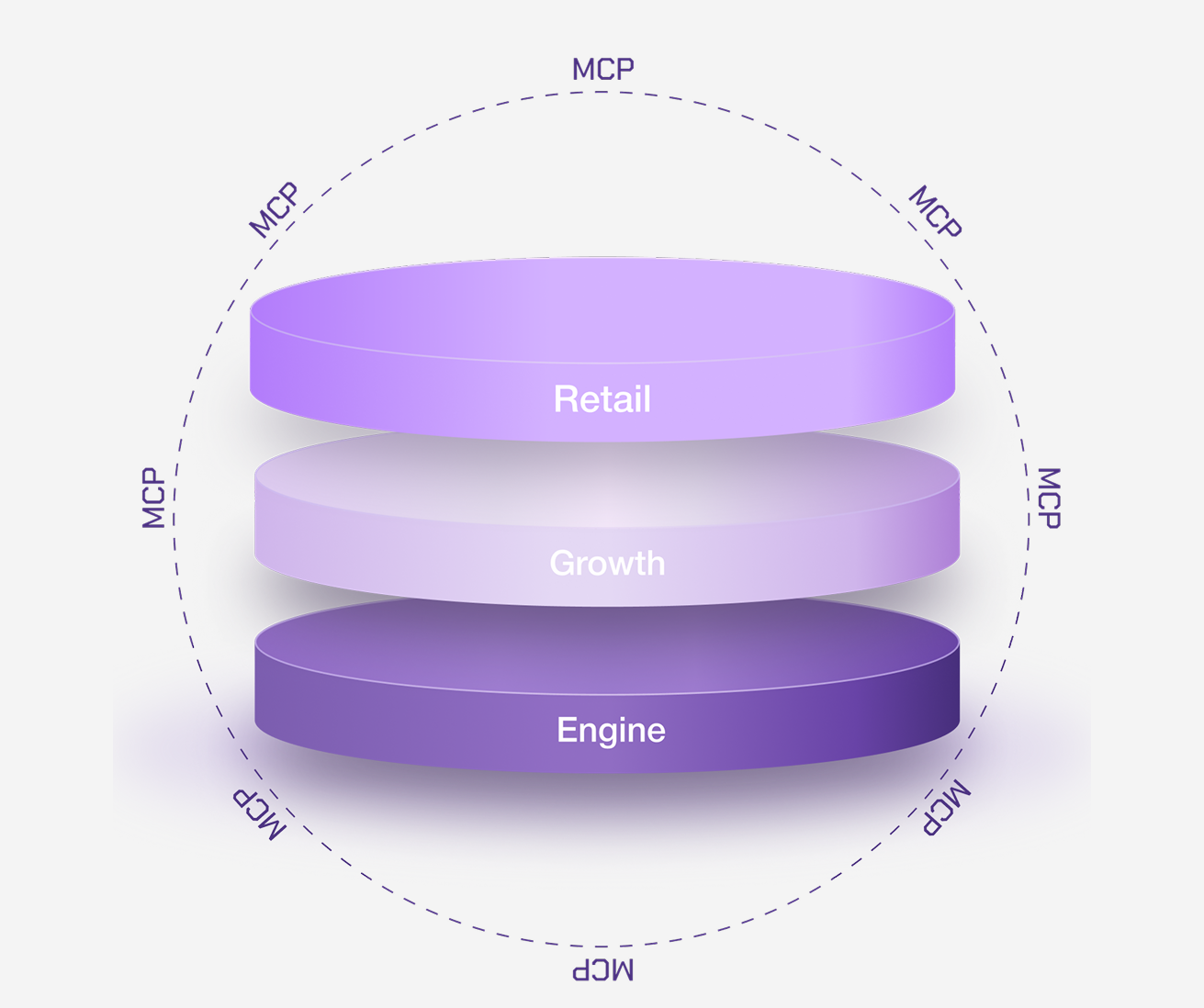
Ready to scale your Retail. Growth. Engine. → Book a Demo
Related articles
The latest updates, insights and news from Retalia.